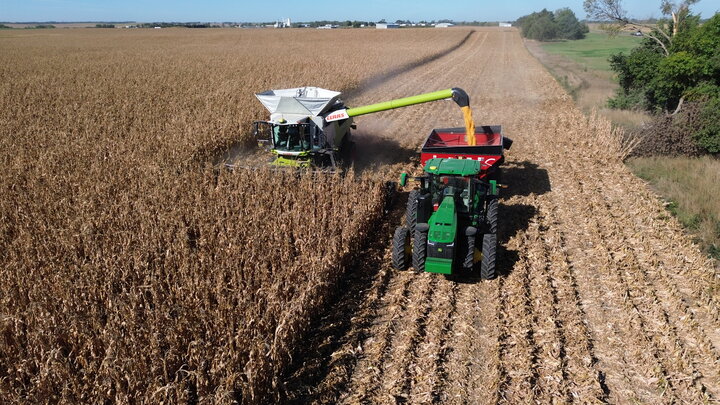
During the 2025 growing season, the Eastern Nebraska Research, Extension and Education Center facilities implemented Updated University of Nebraska nitrogen (N) management recommendations. The latest University of Nebraska research on N management in irrigated corn emphasize in-season nitrogen application during the growing season rather than a blanket, one-size-fits-all approach for irrigated corn production.
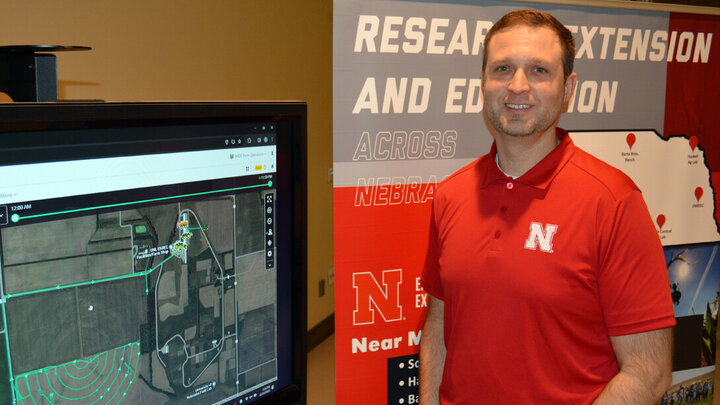
Joe Luck leads the University’s NFarms (Nebraska Future Ag Research & Management Systems) initiative and is also the associate director at the Eastern Nebraska Research, Extension and Education Center. Luck, a professor of Biological Systems Engineering and precision agriculture engineer (and currently serving as interim department head), has dedicated considerable effort to studying and implementing strategies for optimizing N use in irrigated corn. His research supports that it is possible to achieve healthy crops with less nitrogen. He emphasizes the importance of timing and data-driven decisions.
On the importance of N research at University of Nebraska research locations, Luck said, "There is value in utilizing both growers’ fields for on-farm research and University research fields. When doing studies in University fields, the risk level can be amplified to a level that growers might not be comfortable trying."
Based on University research, the three key updated recommendations are:
- Spring Application: Apply a base rate of 50–100 pounds of nitrogen per acre.
- In-Season Application: Apply nitrogen during the growing season, specifically between the V8 and R2 growth stages for optimal plant use and yield.
- Sensor-Based Methods: Consider sensor technology to make data-driven decisions.
The updated recommendations were put into action at the Eastern Nebraska Research, Extension and Education Center (ENREEC) near Mead, NE; Haskell Ag Lab (HAL) near Concord, NE; and South Central Ag Lab (SCAL) near Clay Center, NE. Across locations, early results show significant potential to reduce nitrogen use without forfeiting yield, especially when utilized with modest base rates with in‑season, sensor‑driven decisions.
At ENREEC, standard N rates were cut in half and remaining N applied via sensor‑based fertigation. An example of the initial results shows that in no additional N was triggered in 2 different irrigated fields, and higher N plots did not yield more. Research at HAL included fall, spring, chemigation, and drop‑nozzle applications. Weather limited ideal timing, forcing some blanket applications. At SCAL, optimum N rates and precision tools were evaluated. Research included reduced preplant N and imagery‑based recommendations plus fertigation trials. Initial analysis shows potential for improved efficiency and profitability.
A comprehensive look at the progress, process and analysis of the University research fields is at: https://nfarms.unl.edu/UpdatedNUseAtREECs. Learn more about the updated recommendations in the In-Season Nitrogen Management for Irrigated Corn g2365 publication at: https://extensionpubs.unl.edu/publication/g2365/in-season-nitrogen-management-for-irrigated-corn